
The first in a series on what this El Niño really tests, and what’s within reach
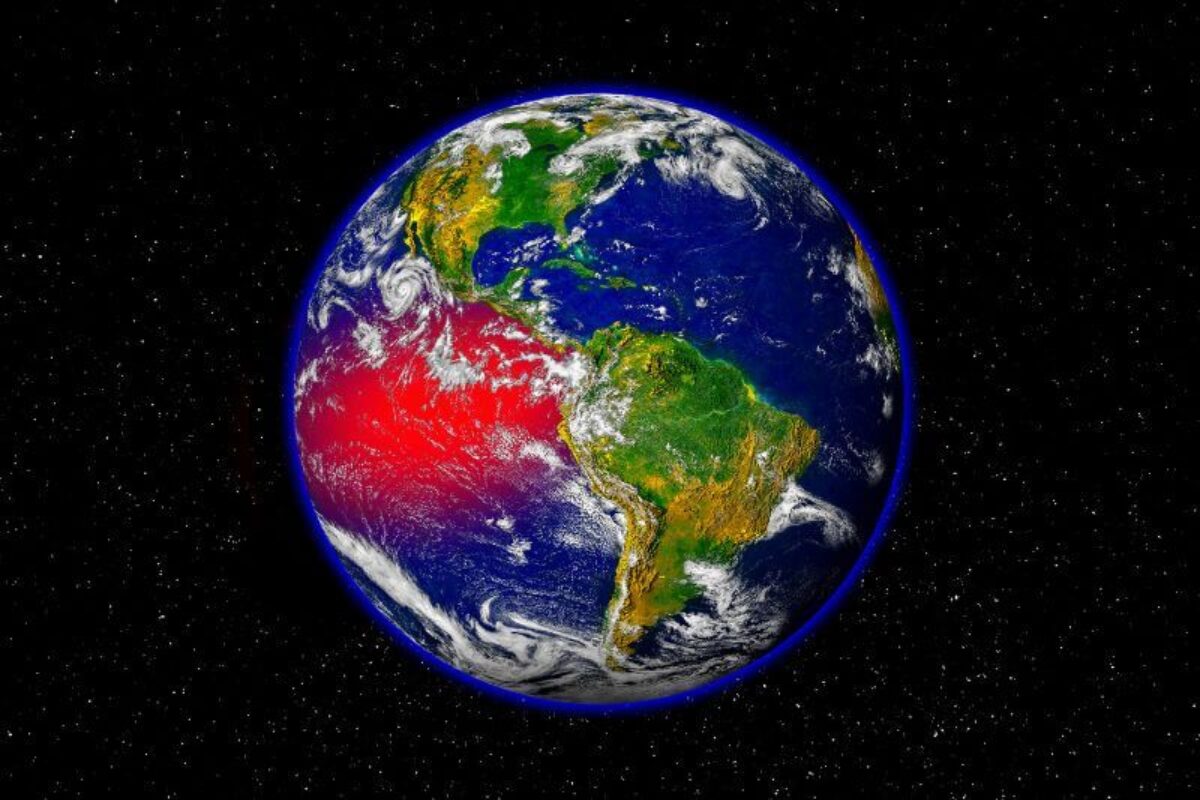
The weather is a major part of farming life, so you’re probably already aware of the forecast high probability of an El Niño this winter, likely to be one of the bigger events on record, peaking through summer 2026–27 with major impact on the next growing season.
But the real question isn’t whether it’s coming. It’s what it actually means for your land and your operation and what, realistically, you can do about it.
A consequence of contemporary agriculture
El Niño isn’t introducing a new problem; it’s exposing one that’s been building for years under contemporary industrialised agriculture. Over the nine years we’ve been providing Ecological Outcome Verification (EOV) monitoring across New Zealand farms, we’ve watched that decline in land state directly: management practices steadily degrading the things that determine how land copes with weather extremes, falling infiltration, rising compaction, increasing bare ground, overgrazing. But this has given us something more valuable: an understanding of the management principles that can reverse it.
So, when the dry intensifies in the east, or the wet turns torrential in the west, the weather will shape the event, but the outcome will be decided by the ecological health of the landbase.
| THE REAL QUESTION is not whether it’s coming — it’s how your land responds. Rain, or the lack of it, is only ever a trigger. What happens next — absorbed, run off, or lost — comes down to the condition of the land it lands on, built up or worn down through management. That’s the question this whole series comes back to. |
Managing the whole, not the parts
This is why management decisions, cropping, fertiliser regime, cover, grazing, trees aren’t separate items to work through one at a time. They’re facets of one whole system, and need to be managed as one: the principles we apply need to bring health to the whole, not just the parts.
At Āta, that’s the same thinking we apply to redesigning businesses and organisations, which, like farms, are living systems. Living systems aren’t machines with interchangeable parts; they’re unique in their ability to self-maintain and self-regenerate. All we’re trying to do, in a business or on a farm, is create the conditions for that regeneration and let nature realise the potential it already has.
Two principles of living systems are highlighted here. Holism: the system can only be understood and repaired as a whole. Cover, grazing, and trees are different faces of the same underlying system, and changing one changes all the others. And Evolutionary: living systems don’t just get hit by change and endure it, they maintain a dynamic balance by continuously adapting to what’s coming. The goal isn’t to survive this El Niño; it’s to have already created the conditions that let the land cope with whatever version of it turns up, the way nature already knows how.
One system, many parts
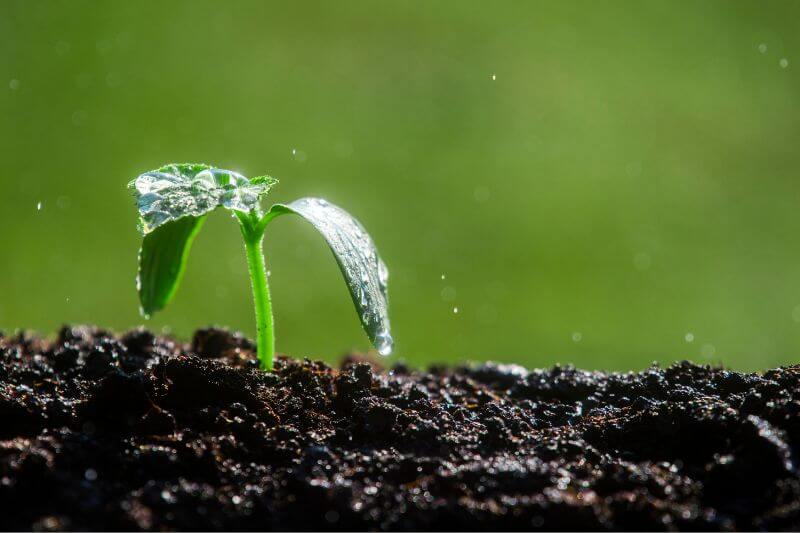
Underneath all of it sits one key attribute: the soil’s capacity to act as a reservoir, capturing water when it falls, holding it long enough for pasture to use, and staying biologically alive enough to keep doing that as conditions swing to extremes. Soil scientist Dr Walter Jehne puts it bluntly: water is the master variable in land health, and what happens to every drop of rain that comes down almost entirely to the condition of the soil it lands on.
That reservoir capacity isn’t one thing. It emerges from management decisions on cover, grazing, and trees acting together, not in isolation.
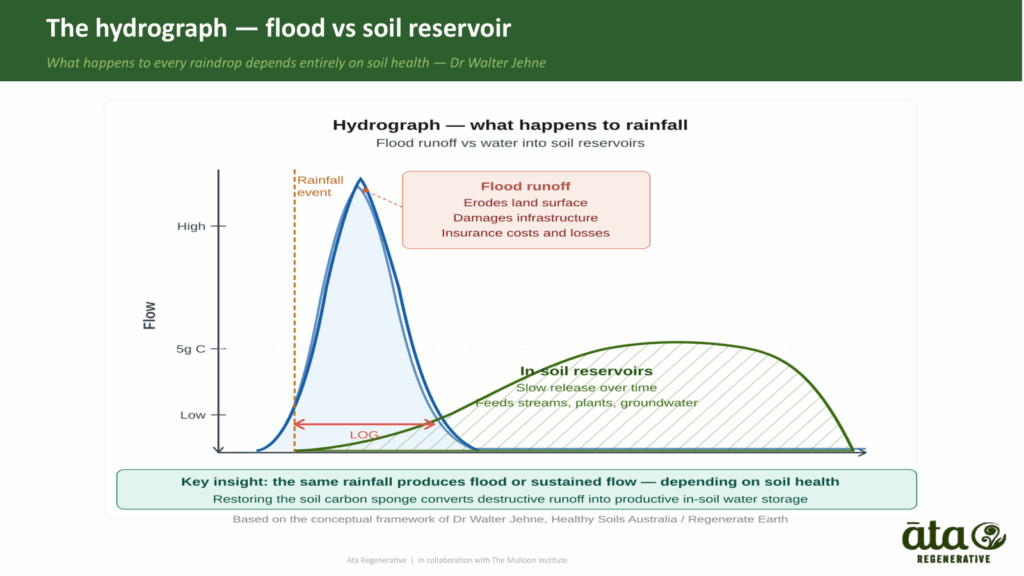
Cover is what keeps the reservoir functioning. Bare ground sheds water instead of storing it, loses what little it captures to evaporation, and is the country’s biggest single driver of soil loss. Earth Sciences New Zealand records around 200 tonnes of soil lost per hectare per year from ground left exposed or overgrazed. Cover reverses all of it: shielding the soil from heat and wind, keeping the biology that builds soil structure working through extremes, and slowing water down long enough to soak in. It’s also the system’s energy source. Every leaf is a solar panel feeding root growth and soil biology, not just the animal above it. Graze that leaf area down too hard, too early, and the energy supply the rest of the system runs on is cut off along with the feed. In organisations that source of energy is engaged people. In agriculture, it’s green leaf above ground.
Grazing management is what decides whether cover exists at all. Rest periods rebuild the leaf area and root mass that create the channels through which water moves. Stocking density and duration influence whether soil compacts shut or stays open to water infiltration and retention. Grazing residual, how much is left behind, not grazed off, is what keeps the reservoir and the energy capture intact between grazing events. Cropping decisions and management have a big impact here too, on how much bare ground appears, and for how long.
Trees do the same job on a longer horizon: slowing wind and water further, deepening root systems into the profile, building shelter that buys the whole system more resilience. They’re not a separate initiative from cover and grazing; they’re the same system extended further, and it’s a thread we’ll pick up again later in this series. Our monitoring shows trees as a missing functional group in the landscape, one that needs to be reintroduced in a way that adds to farm and landscape health.
None of these three works alone. Rest without adequate residual doesn’t rebuild much. Cover without grazing management to protect it erodes anyway. This is the regenerative design principle of holism and interdependence in practice: the reservoir is a property of the whole working together, not a sum of separate fixes.
Feed may just go to waste?
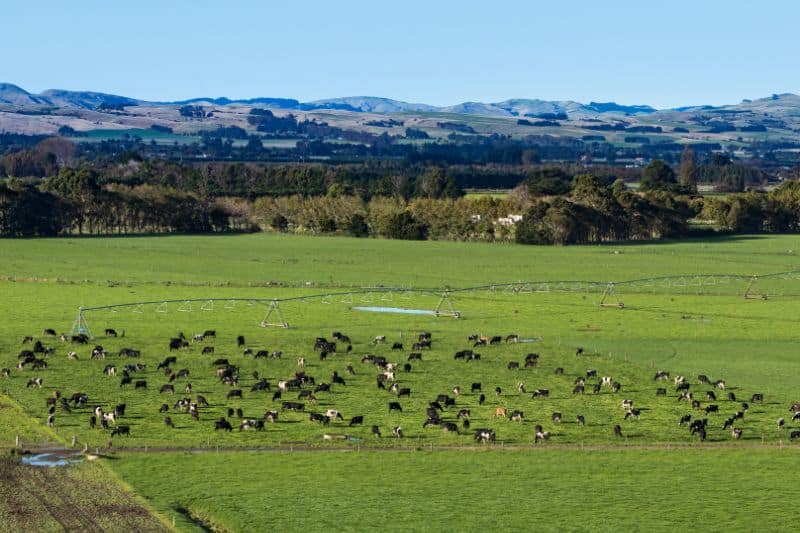
A common worry: holding higher covers or resting paddocks earlier than usual means feed may go unused and wasted. It isn’t. These decisions were not only about the animal, leaving cover behind is feeding the soil biology as much as its banking feed for stock. What isn’t grazed doesn’t disappear: it’s either still on the plant, feeding energy back into the system, or it’s a buffer to graze later if this event proves milder than forecast. Either way, nothing is lost.
This is the dynamic balance in practice: plan as though the drought is coming, whether or not it fully arrives. Prepare, and the season turns out milder, you’re left with cover and feed in reserve, a good problem to have. Don’t prepare, and the drought hits anyway; the damage compounds into bare, compacted ground that takes years to rebuild. A system that’s evolved to handle extremes doesn’t wait to find out which one shows up.
The evidence is already showing up
This isn’t theoretical. Across farms under EOV monitoring, the pattern holds: farms that have shifted to managed grazing and cover restoration show measurable gains in infiltration, less bare ground, and falling compaction, while farms under unmodified, continuous grazing keep trending the other way. Two different trajectories showed up over 9 years. Land health isn’t a stable condition, it’s constantly changing in response to management and this El Niño will make each farm’s state obvious.
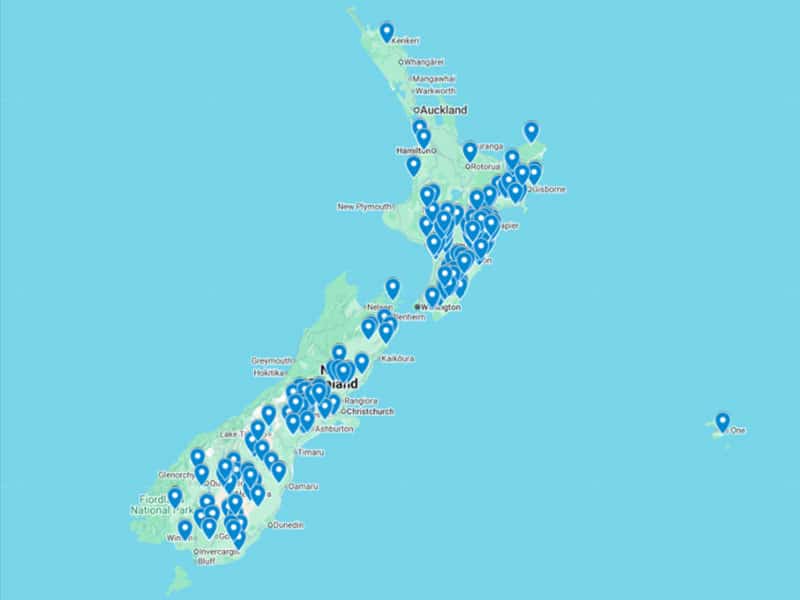
New Zealand farms monitored by āta Verified Regenerative
Where this series goes next
This is the foundation the rest of the series builds on: before dams, before irrigation infrastructure, before anything else, the condition of the soil reservoir decides how much of the water this El Niño delivers or does not actually do useful work on your farm.
The next article gets specific on the grazing side of this system. Rotation length, rest periods, and stocking decisions tailored to a drying East Coast and a wetter West Coast and South Island. Future articles will build out from there. Cropping management and the role of trees both among the candidates.
How healthy is your farm’s soil reservoir right now?
āta Verified Regenerative uses Ecological Outcome Verification to help farmers understand exactly where their land stands. Measuring soil health, water cycles, pasture condition and biodiversity with real data, not guesswork. If this series is raising questions about your own farm, that’s a good place to start.
Learn more about EOV. We welcome you to get in touch with the āta Verified Regenerative team to explore how we can help you understand your land, measure what’s working, and build a more resilient farm system.